A while back The New York Times' periodic "Room for Debate" feature addressed "Presidents and Their Debts: FDR to Bush," and of the eight featured debaters, two were my grad school professors at Ohio University, including Joan Hoff and my friend and mentor Lon Hamby.
Showing posts with label Debates. Show all posts
Showing posts with label Debates. Show all posts
Tuesday, August 09, 2011


Saturday, February 19, 2011
Honoring Bill Russell
President Obama honored Bill Russell with the Presidential Medal of of Freedom a few days ago (rightfully pointing out that Boston needs to do more to honor the Celtic great) and in so doing reminded us of one of the great figures from the world of sports. Indeed Russell always transcended mere sport. Always outspoken about politics and racial issues Russell's integrity always stood out, even above his sizable frame and other-worldy basketball accomplishments.

When people think about race, sports, and Boston they immediately zero in on the woeful record of the Red Sox, the last Major League team to integrate, a team overtly hostile to black players long after Jackie Robinson integrated the Dodgers. The unwillingness of the Red Sox to integrate probably played as big a role in their long championship drought as any single factor. And yet people too often use the Red Sox as a sort of shorthand metaphor for race relations in Boston, a city fraught with racial strife and a sometimes shameful history, particularly given the city's putative liberalism.

Yet if the Red Sox serve as the ur-example of Boston's racial hypocrisy the Celtics represent the opposite strain. Name a significant landmark in the integration of professional basketball and the Celtics either set the pace or quickly fell into line, and that history emerges almost parallel with Russell's career. Russell was not the first black player in the NBA, but he was the league's first bona fide black superstar, its first true black team leader, and not only did he become the NBA's first black head coach, but he was a revolutionary in all of professional sports in breaking that ground. Russell was the first black basketball Hall of Famer and was the cornerstone of the first team to be predominantly black.

Beyond his social importance, Russell has almost been somewhat forgotten in the age-old bar debate about the greatest players of all time. That mythical title long ago went to Michael Jordan, and I always believed that we conceded that title too quickly and too easily. Jordan accumulated incredible numbers and his highlight reel was second to none. yet the point of team sports is to win, and Bill Russell was the greatest winner in the history of American professional team sports. And Russell was always the unquestioned leader and best player on those teams. Russell did not pile up gaudy individual numbers because he was too busy doing the things to make teammates better -- and if making teammates better is a major factor in assessing greatness, who made more players great than Russell? Some might argue that Russell was great because he was surrounded by so many Hall of Famers. I would argue that Russell was great because he made so many good players into Hall of Famers.
In that era Wilt Chamberlain racked up numbers. Bill Russell simply beat the pants off of Chamberlain. And that is because in the context of a team game, Russell was simply the better player. If we have a draft to create an all-time team, if I draft first, I'm taking Russell. And all evidence indicates that my team is going to win while yours looks good losing.

When people think about race, sports, and Boston they immediately zero in on the woeful record of the Red Sox, the last Major League team to integrate, a team overtly hostile to black players long after Jackie Robinson integrated the Dodgers. The unwillingness of the Red Sox to integrate probably played as big a role in their long championship drought as any single factor. And yet people too often use the Red Sox as a sort of shorthand metaphor for race relations in Boston, a city fraught with racial strife and a sometimes shameful history, particularly given the city's putative liberalism.
Yet if the Red Sox serve as the ur-example of Boston's racial hypocrisy the Celtics represent the opposite strain. Name a significant landmark in the integration of professional basketball and the Celtics either set the pace or quickly fell into line, and that history emerges almost parallel with Russell's career. Russell was not the first black player in the NBA, but he was the league's first bona fide black superstar, its first true black team leader, and not only did he become the NBA's first black head coach, but he was a revolutionary in all of professional sports in breaking that ground. Russell was the first black basketball Hall of Famer and was the cornerstone of the first team to be predominantly black.

Beyond his social importance, Russell has almost been somewhat forgotten in the age-old bar debate about the greatest players of all time. That mythical title long ago went to Michael Jordan, and I always believed that we conceded that title too quickly and too easily. Jordan accumulated incredible numbers and his highlight reel was second to none. yet the point of team sports is to win, and Bill Russell was the greatest winner in the history of American professional team sports. And Russell was always the unquestioned leader and best player on those teams. Russell did not pile up gaudy individual numbers because he was too busy doing the things to make teammates better -- and if making teammates better is a major factor in assessing greatness, who made more players great than Russell? Some might argue that Russell was great because he was surrounded by so many Hall of Famers. I would argue that Russell was great because he made so many good players into Hall of Famers.
In that era Wilt Chamberlain racked up numbers. Bill Russell simply beat the pants off of Chamberlain. And that is because in the context of a team game, Russell was simply the better player. If we have a draft to create an all-time team, if I draft first, I'm taking Russell. And all evidence indicates that my team is going to win while yours looks good losing.

Tuesday, September 14, 2010
Wieseltier's Mosque Notes
Leon Wieseltier, someone who cannot ever be accused of being soft headed or weak spined, has what is hands-down the best piece on the Cordoba Mosque controversy I have yet read.
Tuesday, August 03, 2010
Overrating Favre
Twice today on ESPN talking heads proposed that the maybe-retiring Brett Favre might be the greatest quarterback of all time. let's dispense with this nonsense right now. Favre's prolific statistics notwithstanding, during the era when he played alone there were at least five better all-time quarterbacks. In no particular order: Joe Montana, Dan Marino, John Elway, Peyton Manning, and Tom Brady were all better than Favre.
Friday, May 28, 2010
You Can't Get Enough of That Wonderful Duff
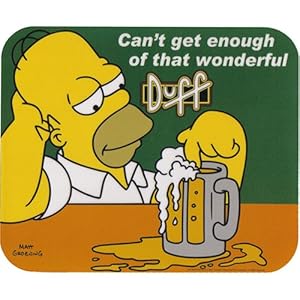
There is a vigorous debate going on about what it means to be a craft beer. My own contribution, since it's Friday? Mmmmmmm . . . Beeeeeer.
Tuesday, May 18, 2010
The Granite State v The Green Mountain State
You wanted it, you got it: The Definitive Guide to Telling New Hampshire and Vermont Apart. It's pretty much all true.
A small sample:
A small sample:
Simply put, Vermont is a little bitch. When you see the V in Vermont, think “vagina” and it will help you get a fair assessment of the state. New Hampshire, in contrast, displays a much tougher persona. As you might guess about the only New England state to host a NASCAR race, its residents are more likely to own guns and less likely to have college diplomas, which isn’t necessarily a bad thing when your neighbor is as fruity as Vermont.That's about right.
Tuesday, December 22, 2009
Pre-Holiday Links
Super-duper pre-holiday quick hits from things that have caught my eye of late:
I'm very much interested in reading John Milton Cooper's massive new biography of Woodrow Wilson.
If you want to get stuff you almost always have to pay for it. Taxes are not a form of creeping socialism. They are a sign of a responsible society. There is a huge difference.
Spin has a slideshow of its 40 Best Albums of 2009. Begin debating now. (I must be getting old. I sort of miss the days when reading a simple list, preferably with annotations forming some sort of argument, was enough to kickstart a debate. The slideshow googaw takles a lot of time, is inconvenient, does not actually facilitate anything, but it does have images. And it takes up more bandwidth. So that's something.)
Most of the climate change doubters are basically fools. But you knew that already. I hope.
The quality of Cornel West's work has, in the minds of many, gone seriously downhill. The trajectory pretty much is in direct negative relationship with his public fame.
Invictus was very good and reasonably historically accurate. I'm working on an essay on the movie, the book on which it is based, and another book on South African sport. Hopefully I'll have good news on that front down the road.
Thursday, December 03, 2009
Herf v. Wolin: Heavyweights Square Off
This article on "the long, toxic afterlife of Nazi propaganda in the Arab world" by my friend and former professor Jeffrey Herf in The Chronicle of Higher Education prompted a, let's say "spirited" rejoinder from the historian Richard Wolin. The Chronicle then brought the two together, in a manner of speaking, for an "exchange." Read it all.
Friday, July 31, 2009
An Uncivil Civil War War
The other night, Sally Jenkins was on The Daily Show touting a new book on Civil War Era America, The State of Jones. Jenkins is a Washington Post sportswriter (and generally a fine one at that) and so my teeth were set on edge when she started in on that great journalistic cliche that her book was one that explored a topic that historians had not only ignored but had intentionally kept hidden. People who say things like this generally speaking do not know what the fuck they are talking about. There are topics that could use more exploration, there are topics that have been mishandled by historians, and there are topics that could use reappraisal. But there is no topic in the historical profession where there has been collusion. When you hear people say that historians have ignored topic X or Y you can be certain that the person spouting off has an agenda that has nothing to do with what historians have actually written.
In any case, Jenkins wrote the book with a Harvard historian, so I at least assumed that she was out there for the salesmanship, and hey, she's on the Daily Show, my book didn't pass muster, so more power to her. Still, the assertions she made about her untold story did not ring true with me. But it had been a while since I had really focused on the Civil War and Old South, even if those topics made up a minor PhD field for me and a good hunk of my MA work as well.
And with reasons. Because of course Jenkins was wrong. And it appears that she was willfully wrong. For right down here in Texas, down at Texas State University in San Marcos (between San Antonio and Austin) a history professor named Victoria Bynum wrote a well regarded book on virtually the same topic and with practically the same title. And little did I know that percolating below the surface was a hell of a controversy, which came to the attention of most people in The New York Times and which Kevin Levin (with Ralph Luker's assistance) explicates in much greater depth and with loads of great links at Cliopatria. And wouldn't you know it -- Hollywood has a role in this fracas as well.
By the way, for what it's worth, I think Bynum wins the historiographical debate by a knockout.
Friday, February 13, 2009
Denying New Deal Denialists
Eric Rauchway takes on New Deal denialists in a post republished at History News Network. He drives a metaphor that he draws from Ronald Reagan into the ground, but otherwise, his arguments dovetails nicely with something I wrote last month in which I concluded that whatever its shortcomigs, the New Deal was quite remarkable, and that if we still place stock in the three R's of Relief, Reform, and Recovery, the New Deal was damned successful at the first, quite successful at the second, and middling (but not a failure) at the third.
Saturday, January 24, 2009
A Difference of Opinion on Oscar
My goodness, how's this for diametrically opposed views on the just-announced Oscar Nominations?: They either mark the triumph of quality or a tremendous disappointment that reflected a bad movie year. Because of the late-year timing of virtually all of the best picture nominees, and their even later arrival here in West Texas, this is the first year I can ever remember when I have not seen a single best picture nominee by nomination announcement time.
Monday, April 30, 2007
Estrich Gets it Wrong on Obama
In an otherwise interesting piece for Fox News, I think Susan Estrich misses the mark on Obama's performance. Here is the money excerpt (and it is the point of her argument, so I'm not sure why it is buried so deep):
I see a number of flaws in this argument. I agree with the general sentiment -- Israel is, if not our most important ally, at least one of them. But in an early Democratic primary debate, if Brian Williams' query was "The Israel question" then eliding Israel may have been one of Obama's wisest choices. Now don't get me wrong -- Obama's approach to Israel makes me a bit wary. But at the same time, had the red meat crowd on the Democratic left, which will have dispproportionate impact on the nomination process, heard "Israel," they would not have heard it in the way that Estrich suggests would have been good for Obama. They could do more harm to him, in other words, than "people like Estrich" can do him good. This assessment of the way primaries work seems so obvious that if it is not a truism it at least rings true: Better to have folks like Estrich waiting for satisfaction than to raise the ire of the Daily Kos crowd.
Asked about America's best friends in the world, Obama waxed on about NATO and our European allies before looking east to Japan. I'm not a foreign policy expert, but I've been around debates for decades and it was clear that Obama didn't get that this was the Israel question.
He didn't get that people like me, voters and donors, were waiting to hear the word "Israel" in a way that Japanese Americans were not. Japan doesn't live under constant threats; Israel does. Japanese Americans don't worry about Japan's survival in the way Jewish Americans worry about Israel. Obama's answer, in my book, was the biggest mistake of the debate.
I see a number of flaws in this argument. I agree with the general sentiment -- Israel is, if not our most important ally, at least one of them. But in an early Democratic primary debate, if Brian Williams' query was "The Israel question" then eliding Israel may have been one of Obama's wisest choices. Now don't get me wrong -- Obama's approach to Israel makes me a bit wary. But at the same time, had the red meat crowd on the Democratic left, which will have dispproportionate impact on the nomination process, heard "Israel," they would not have heard it in the way that Estrich suggests would have been good for Obama. They could do more harm to him, in other words, than "people like Estrich" can do him good. This assessment of the way primaries work seems so obvious that if it is not a truism it at least rings true: Better to have folks like Estrich waiting for satisfaction than to raise the ire of the Daily Kos crowd.
If anything, Estrich's assertion shows a certain amount of interest group solipsism -- a sense that the political world rotates around the axis of her concerns -- that certainly has not thus far been reflected in Obama's fundraising, in his popularity in the polls, however flawed those polls are, or in the post-debate support Obama has held and garnered. In other words, Estrich's argument is one put forth without much evidence. She so wants Obama to be hurt by not answering what she perceived as "the Israel question" in the correct way that she is asserting that such harm has been done without any foundation.
Subscribe to:
Posts (Atom)

