Showing posts with label Media. Show all posts
Showing posts with label Media. Show all posts
Tuesday, January 24, 2012
The Economist v. The Economist
At the FPA Africa Blog I show how The Economist loses a debate against itself (and rather badly) on the issue of South African politics and the ANC. It's a thing to behold.


Wednesday, September 15, 2010
On Jon Stewart
This pretty awesome New York Magazine article on Jon Stewart has been making the rounds, and rightfully so. Stewart's show is certainly about politics, but more importantly, it is probably the most trenchant media watchdog that we have.
Thursday, November 19, 2009
Academics and Media
The Chronicle of Higher Education asked a number of academics about "issues of education, communications, and news and cultural literacy" and "how the decline of those news media will affect higher education." Their answers are thoughtful and very much worth considering.
I am one of those people who laments the decline, and probably eventual death, of the print newspaper. But I do not mistake the physical presence of print and cheap paper with a loss of good things to read, viable sources of opinion, or varying viewpoints. There will always be demand for these things, and the best of today's print media will adjust, the worst will fail, and that's the way the system is supposed to work. Yes, I'd miss a real honest-to-goodness Sunday newspaper, but I also believe that even a handful of those will survive, even if in morphed, national form. But the best papers are basically national in nature anyhow. The Sunday New York Times still carries with it as metro section, but let's be real -- the average reader of the Sunday Times does not give a damn about bond issues in Eastchester.
Wednesday, May 20, 2009
Keele Diary #14
I am fully willing to embrace the rest of the world's major team sports. Based on many years in South Africa, the UK and elsewhere, I have come legitimately to love rugby, to very much like and be intrigued by cricket, and I even have developed a liking for soccer, a sport I once disdained. Sports have a certain universality to them. Anyone who loves American sports would love cricket, soccer, and rugby had they grown up elsewhere.
Nonetheless, when abroad I miss American sports and will go to great lengths to see baseball, football, basketball, and even hockey if it is televised anywhere. Late last night one of the British networks that I can access in my flat (I could probably see every game of all of my sorts were I to own a satellite dish or full cable package) played the live feed of the Nuggets-Lakers game, which I was able to watch until halftime rolled aound at 3 am, and even then I went to bed to avoid seeing the lowlights of the C's-Magic series.
But there is an interesting approach to presenting American sports here in the UK. While they pull in American feeds, either live or tape delayed, they have a British studio show. The same guy does all of the shows for the big three American sports, or at least the weekly games of the week. He's an affable enough fellow and certainly likes and knows the game well. Then he has a sidekick. And the sidekick fits one of two models: He is either an American player drawn from something like the 29th tier of former players -- a guy you've never heard of, or whose four-game cup of coffee with the Reds got him his stint (as former star) -- or else he is a British athlete who played one of the sports with a comparable level of accomplishment. And again, these people are generally fine, know the game, did play the game, and they tend to be good at bringing the games to an audience that might not know it all that well, though something tells me that the huge percentage of the community watching the late-late-late night programming may come from a knowledgeable expat community.
But again, all well and good, and done far better than we do rugby or cricket, and probably not much better than we do soccer.
But then here is the kicker. When they show their highlights packages, rather than simply crib from Sportscenter or from TNT/ABC, the British highlights are put together with what I can only assume is some American expat in his 20s, and the quality is laughably bad, like the substitute local news sports reader for some rural market. He's way too loud and gratingly enthusiastic for the highlights, tries to be hip and colloquial, has lousy timing, and is generally a complete amateur goofball. And I do not mean by the standards of professional broadcasting.
You know how the lowest rung of argumentation is when someone says "who are you to criticize? Could you do that?" It's a dumb argument because it means no one can pass judgment on anything except those in their own professional areas of expertise and that no one thus can have any opinion but to be an accepting automoton. nonetheless, even using that crude measuring stick my answer is: Absolutely. I would do a much, much better job of narrating the sports highlights than this guy. I have a modest but real background in broadcasting sports on the radio, I know the games, I know how to modulate my voice, and I know better than to refer to a dunk as a "flushjob" on two consecutive highlights. Pretty much every time I am here I am tempted to figure out who produces these shows and to add my services -- I have written quite a bit about sports, not many people here could plausibly claim to know all three games better than I do, and I also understand British sporting culture.
In any case, it's still raining off and on here. I. Am. So. Sick. Of. Rain.
Oh, and in case you haven't noticed, British politics are in quite a state.
Friday, January 16, 2009
Context Free Headline of the Year (So Far)
"Dogs Don't Use Condoms".
(Bonus: Pamela Anderson is prominently involved, but then again, of course she is.)
Thursday, November 06, 2008
When Punditry Goes Wrong
About ten days before the election Salon anointed "The punditocracy's Seven Biggest Blunders of the 2008 election," specifically of the last two months or so of the campaign. For me the problem is not when pundits are wrong -- that goes with the territory. It is the utter certainty in which they couch their assertions and the way in which that wrongness is never held to account. Indeed, bluster becomes so important in climbing the ranks of the pundit elite that being right or reasonable is far less important than making a name for being assertive. Bill Kristol (as just one example among many) has been so wrong on so much over the last few years, and yet seemingly every burst of idiocy pays off for him with a higher-profile gig.
Friday, August 22, 2008
Misrepresenting a Trend
I am intrigued by the Amethyst Inistiative, a push by more than a hundred college and university presidents to reconsider the 21-year old drinking age. I will simply say that I have never heard any particularly valid reasons for drawing an arbitrary line preventing legal adults who otherwise bear every other right and responsibility of adulthood from participating in something that adults over that arbitrary age limit are allowed to do. But I'll leave dissecting that proposal to others.
I do, however, take issue with The New York Times' latest headline on the ongoing story: 2 Withdraw From Petition to Rethink Drinking Age. two college presidents in Georgia have indeed withdrawn their name from the petition. But fifteen more have signed on. Thus while the story's headline, which should give some sense of the true measure of the story, indicates waning support for the petition, the reality is that its number of proponents is growing, and is doing so substantially.
Thursday, November 01, 2007
On: The Glory of Newspapers and the Pats' World Dominance
One of the great joys of being on the road and in a major city is the ability to read that city's daily newspaper. We dedidedly do not live in a golden age of newspapers, but almost despite themselves, local papers still provide a sense of a city and its character. More than that, though, is that a world class newspaper (and despite accusations to the contrary and the constant, sneering invocation in some ideological corners of the "Mainstream Media," or MSM, usually for not covering some story that may or may not actually be essential news, or for not covering a story the way the accuser feels it should be covered, there are world class papers in the United States) provides a tactile connection to the world. I can read The Washington Post online every day, and I do. But it is so much better to be able to hold the Post, to flip through it, to let the stories draw you in, to carry it around.
This unintended homage to newspapers is merely my way of directing you to Sally Jenkins' column today in the Post's sports section, which is easily one of the five best in the country. I probably would not have discovered it had I not been flipping through that sports section this morning. It provides the best non-Boston, non-Pats-fan perspective on the various pseudo-controversies swirling around the Patriots these days. It really is a fantastic column.
Now I need to go check out the op-ed pages. And then wash this damned ink off of my hands.
Wednesday, October 24, 2007
Quick Hits While You Wait
Here are a few links to help you while away the seven hours and six minutes between now and the first pitch of the 2007 World series.:
Baseball first, of course: I would be willing to bet that no major newspaper in the country devotes as many editorials to its professional sports teams as does The Boston Globe in any given year. Yesterday's was their latest. My guess is that the conclusion that Sox fans deserve the title more than Rockies fans, however true it might be (and it is true) won't endear Boston fans to our growing legion of shrill and irrational critics.
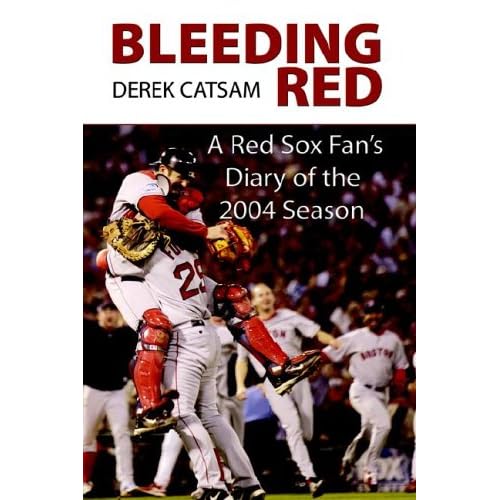
Meanwhile, also at the Globe, Bob Hohler reminds us (as if we needed it) of the signinificance of 2004. Now forgive me while I channel Andrew Sullivan, but I can think of another guy who spent a lot of time in 2004 trying to figure out what it all means.
But enough self indulgence. john Donovan at SI has one of those position-by-position matchup charts that seems pretty reasonably to assess the relative talent levels of the two teams. All of the speculation becomes moot in a little while, though.
On to other matters.
Normally I restrict this sort of thing to the South Africa Blog (I really am full of myself today, aren't I?) but this feature on Thabo Mbeki's relationship with the media caught my eye this morning. Essentially the Mail & Guardian asked two prominent South African writers to assess that issue, and their independent conclusions are, I think, telling.
And since I am emphasizing media issues today, could the Jena 6 case prove to have an uncomfortable amount in common with the Duke lacrosse case? Craig Franklin, assistant editor at the Jena Times, argues as much in the Christian Science Monitor.
Finally, regular readers know that I am mystified by the
appeal of Rudolph Giuliani. Now this Washington Monthly piece simply adds to the suspicion many of us have about Guliani's inclinations toward a dangerous desire to centralize his own power when he has it.
Sox take Game 1 in Fenway tonight 7-2.
Wednesday, September 19, 2007
Bob Herbert and the Subculture of the Punditocracy
In the latest Washington Monthly TA Frank has a compelling article on New York Times columnist Bob Herbert with the provocative title "Why is Bob Herbert Boring?" But rather than being a snide attack on Herbert or a snarky takedown, Frank really wants to know why Herbert (his column from today is here) isn't given a lot more credit for being among the most astute columnists working today. I started to pull excerpts, but the whole thing is so good that you really should read the whole thing, especially if the insular nature of modern punditry fascinates, confuses, or vexes you.
Tellingly enough, I saw references to this piece today on at least a couple of blogs -- Andrew Sullivan and TNR, as I recall -- and ignored it because I assumed that an article on why Bob Herbert is boring would be, well, boring. Instead Frank provides one of the most insightful pieces on the naval gazing journalistic subculture that I've read in a long time. (By the way, can you tell that I've been shopping a submission of an article to that same journalistic subculture with no luck so far? Am I really that transparent?)
Subscribe to:
Posts (Atom)

